17 March 2021

FORTY SHADES OF GREEN

Continuing my celebration of thirty years as a published author and consultant in the music and entertainment genres and with today being St Patrick's Day what follows is my article on Johnny Cash's 1963 tour of Ireland.

.................................

The year 1963 started off with the release of the concept album Blood, Sweat And Tears and would find Cash hitting the top spot again with the single Ring Of Fire, his first number one in four years. Cash was also on the road for most of the year including an appearance at the famous Hollywood Bowl in Los Angeles. It also saw Cash make his first full concert tour in the United Kingdom with most of the dates in Ireland but, as we shall see later, it included two concerts in England.

The tour was promoted by Tom Costello and Bill Fuller and accompanying Cash on tour were The Tennessee Three (Luther Perkins, Marshall Grant and W. S. Holland), June Carter and his manager Saul Holiff.

Other acts on the tour included The Cadets, Savoy Swing Seven, The Victors Showband, Dermot O’Brien Stellas, Johnny Grant, The Mounties Showband and Pete Brown Showband. Most of the support acts were local bands from the places visited during the tour.

It is unclear what date they flew into Ireland but on Tuesday 8th October a press event was held at the Crystal Ballroom in Dublin. They also recorded for The Showband Show at the RTE Television Studios.

The tour kicked off with a show at the Granada Ballroom in Kingscourt, Cavan on Wednesday 9th. There were no shows on the next three days although it is possible he flew to England and we look at this possibility later in the article.

Sunday 13th found the Johnny Cash Show performing in Dundalk at The Adelphi and following another day off the tour continued at the Lakeland Ballroom in Mullingar (15th), Salthill, Galway (16th), Limerick (17th) and Mallow, Cork (18th). There were two shows on the 19th in Dublin and Rush, County Dublin and the tour wound up with shows in Athy and Kilkenny.

Among the songs performed during the tour were Big River, Rock Island Line, John Henry, Ballad Of A Teenage Queen, Folsom Prison Blues and, of course, Forty Shades Of Green.

In an interview with Peter Clark following the show in Mallow, Cash talked about visiting Ireland and the song Forty Shades Of Green. “Well, it’s always been my ambition to visit Ireland and when I got my first real chance to take a holiday three years ago I naturally came over here. My wife was with me and we hired a car and drove all over the place. I casually remarked ‘there must be 40 shades of green back there’ on the way back on the plane and my wife suggested it would be a good song title. I took her up on it, scribbled out the words there and then, added the music later, and there it was.”

In my Johnny Cash Chronicle I had two dates listed of shows that Cash played in England in October 1963.

There were shows at the Astoria Club in Manchester and the Irish Social Club in Camden Town, London, most likely on 10th and 11th October. These were Cash’s first ‘real’ concerts in England his only other appearance being on the ABC Television show Boy Meets Girls where he was backed by UK musicians including Joe Brown, due to Musicians Union rules about visiting American musicians.

There is no doubt that these concerts took place as there are photographs by Brian Smith taken at the Manchester Show.

Trying to ascertain the actual dates is not so easy. Although it cannot be 100% guaranteed it is more than likely that the shows did take place on the 10th and 11th as Cash had three days off following the show in Kingscourt on the 9th October. Compared to the distances travelled in the States between shows it would not be impossible to travel the short distances from Kingscourt to Manchester and then to London and back to Ireland. Until any other information comes to light these dates will remain accurate.

This brings us to the RTE Radio broadcast Johnny Cash’s Lost Tour of Ireland.

Narrated by Jim Lockhart, produced by Tim Desmond and researched by Paul McCann the documentary gives a different perspective on Johnny Cash and also reveals his long relationship with Ireland. The documentary features comments from Eileen Reid, a member of The Cadets who supported Cash on some of the dates, and fans who attended the shows.

The documentary was made possible when a recording by Enda Shortall and his boss, who provided sound equipment for the concert at the National Stadium in Dublin on 19th October. Found in an old tin the recording is a piece of musical history which takes the listener back to the exciting days of 1963.

I was fortunate to have the opportunity to listen to the entire concert and the sound quality is excellent considering the age of the recording.

Following an introduction Cash kicks of the show with Big River and follows with Forty Shades Of Green, which receives a great reaction from the audience, and many more hits (Rock Island LineBallad Of A Teenage QueenRing Of Fire, I Walk The LineDark As A Dungeon) before bringing the first part of the show to a close. June Carter then takes the stage for a selection of Carter Family classics after which Cash returns for a few numbers before closing the show with Folsom Prison Blues and a reprise of Forty Shades Of Green.

Cash sounds in good voice, jokes a lot with the audience and it is a great example of  how Johnny Cash and the Tennessee Three sounded in concert back in 1963.

With thanks to Paul McCann, Tim Desmond (RTE), Jonathan Holiff and Brian Smith

05 March 2021

ORADOUR-SUR-GLANE

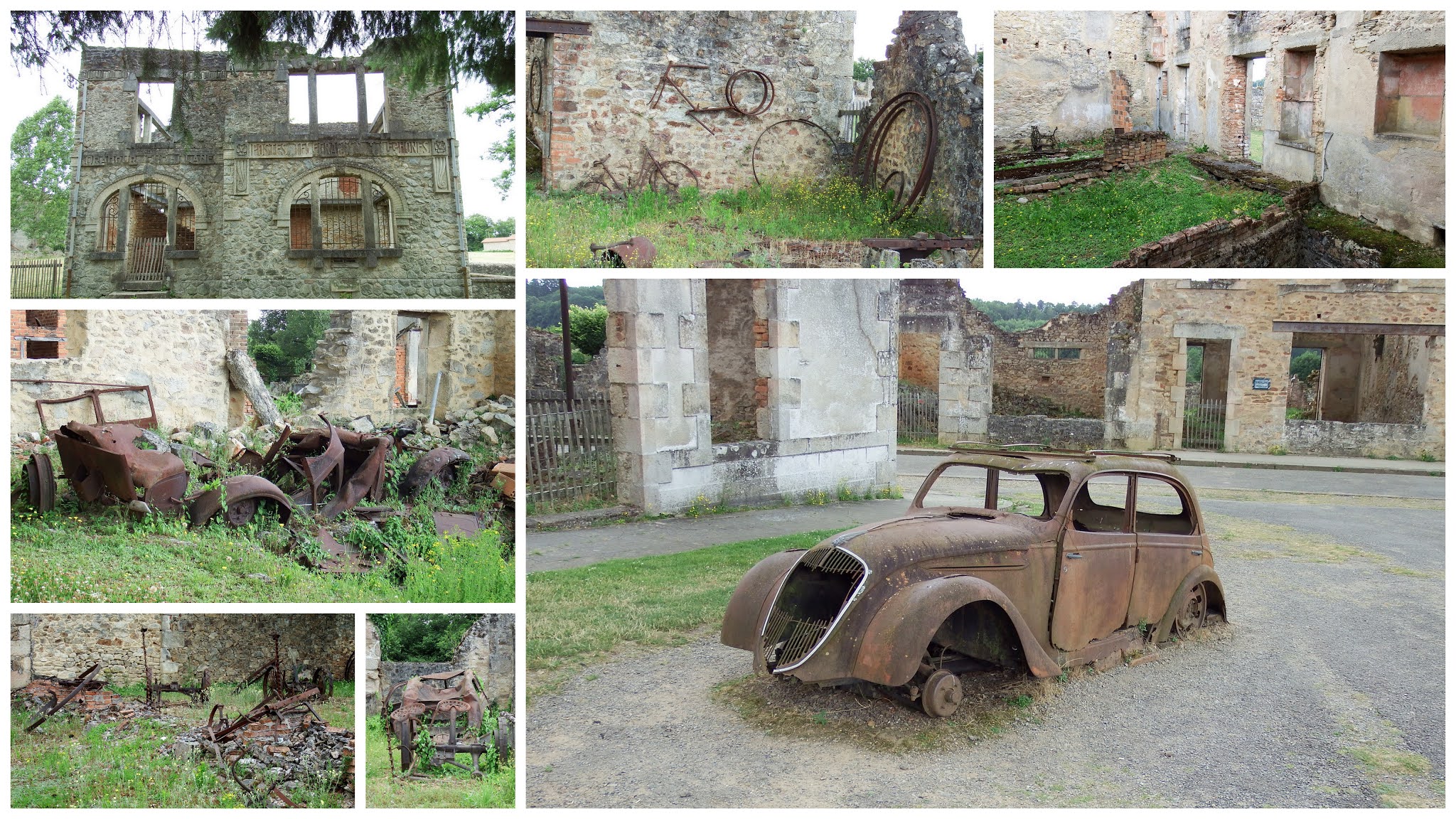
In 2016 I went on my second Leger Battlefield Tour, 'France Under The Jackboot' which looked at France under Nazi occupation. The tour included the events of the Holocaust in France, the role of the Special Operations Executive, concentrating on the work of Violette Szabo, and an emotional visit to the remains of Oradour-sur Glane. In this article I will look back at the events that led to the destruction of the village, my visit and some of the photos I took.


Oradour-sur-Glane was a small idyllic village, with a population of around 350, located approximately 15 miles north-west of Limoges which, on 10 June 1944, was the site of one of the worst crimes against civilians in occupied France.

Following the allied landings on 6 June 1944, along the beaches of Normandy, efforts by the resistance increased with the aim to disrupt German supplies and communications. Any organised attacks against German military personnel or property was met with brutal consequences resulting in members of the French resistance or sympathizers being killed or sent to concentration camps. Field Marshal Gerd von Rundstedt, Commander-in-Chief for the West, ordered that the resistance must be crushed, swiftly and with ruthless initiative.

There has been much speculation as to why Oradour-sur-Glane was subject to such a horrific massacre, especially when no German troops occupied the village and it seemed likely that the war would pass it by. Of course, as we shall see, this couldn't be further from the truth.

A number of reasons have been given... the killing of German troops by the resistance or an attempt to blow up a bridge at the nearby village of St. Junien. However, the most common theory was the abduction and execution of SS Sturmbannfuhrer Helmut Kampfe.

Kampfe, commander of the 3rd Battalion, 4th SS Panzergrenadier Regiment 'Der Fuhrer', was abducted on 9 June and executed the following day by the local resistance. A popular and highly-decorated officer he was also a close friend of SS Sturmbannfuhrer Adolf Diekmann.

General Lammerding, commanding officer of the 2nd SS Panzer Division, had already ordered action against Soviet civilians for partisan activities which resulted in the deaths of thousands of men, women and children and the destruction of many villages. On 9 June 1944 he issued orders for the 'cleansing' of the area surrounding Clermont-Ferrand, which included Oradour-sur-Glane. The same day, 99 men were hanged in Tulle near Limoges.

The following day troops from the 3rd Company, 1st Battalion, 4th SS Panzergrenadier Regiment, led by Adolf Diekman, advanced on Oradour-sur-Glane and by lunchtime had surrounded the village. The population had increased to over 600 people on that June day with children, evacuated from other areas, in the schools because of a medical visit, despite it being a Saturday. There was also a distribution of tobacco rations scheduled and many people were there to stock up on provisions.

The villagers were rounded up in the market square and separated by gender. The men, totalling 197, were taken to barns on the edge of the town while 240 women and 205 children were locked in the church. SS troops torched the barns and threw grenades into the church. A few tried to escape the flames but were shot. In total 642 men, women and children were killed in the massacre but that wasn't the end of the story. The village was looted and then burned to the ground. By 8pm the SS troops left the smoking ruins.

Only six men and one woman survived the horror that day while another fifteen villagers had managed to hide and avoid capture. Mme Marguerite Rouffanche was the sole survivor from the church and spent more than a year recovering from her injuries, she had been shot five times. She lost her husband, son, two daughters and grandson that fateful day. In 1953 she would give evidence at the trial in Bordeaux. She returned to the new village when it was built and lived there until her death in 1988.


The actions of the massacre didn't go unnoticed and forced the German Army to search for an explanation. In the evening, after the troops had left the village, Diekman ordered his officers not to discuss the events that had unfolded that day. If asked they were to explain that insurgents were the ones who attacked the division and were killed in the ensuing battle. This explanation was offered to General Eugene Bridoux, the State Secretary of the Vichy Ministry of Defence. It read that the men in the village had died during the battle, the fight had been initiated by the village and the women and children had taken refuge in the church and were killed when ammunition had ignited inside the building. They claimed that the church fire was caused by explosives hidden in the building by the resistance and was a deliberate act to discredit the Germans. However, it is hard to believe they would have set fire to a building in which the women and children were being held. A criminal investigation was held by the German Army Commander-in-Chief with the result that 'military concerns justified the retaliation.'

Following the end of the war the events of that fateful day continued to receive attention and in 1946 the French government declared that the site be a national memorial. Furthermore, a French prosecution team put forward documentation about the killings to the International Military Tribunal in Nuremberg. No conclusion was ever reached about what happened that day or why. There was no substantial evidence linking the resistance with the village or who was responsible for ordering the massacre. 

In the years that followed many explanations and theories were generated, many based on flimsy evidence. Despite all the attention the events received very few were ever prosecuted or even stood trial. Diekman died in battle a few weeks after the massacre while the German authorities refused to extradite Lammerding, even though he was convicted and sentenced to death by a court in 1953. He died in 1971.

A French court did prosecute 21 former members of the SS for the crimes committed in Oradour-sur-Glane. Two were sentenced to death and the rest received prison  sentences of between 5 and 20 years. All were freed, including those sentenced to death, within a few years.


Today the village stands as a memorial to the 642 men, women and children who died that fateful day in 1944. Should you visit the village? Definitely. It is sad and emotional but the only way to learn about the atrocities that happened there.

My visit was in July 2016 during the Leger 'France Under The Jackboot' tour and it was one of the saddest parts of the whole trip. At this point I must thank our tour guide, Frederick Greenhow, whose knowledge was second to none and throughout the whole tour kept us engrossed during the long coach journeys with stories and background information on the places we visited. I must also thank our two coach drivers, David Lonsdale and Simon Harriman, who did an amazing job.

You enter the village through the visitor centre which covers the years from 1933 to 1953 and tells the story of the occupation of France, the French Resistance and the events of the 9th and 10th of June through photographs, witness accounts, film and a slide show.

As you walk along the main street you see the ruins of various buildings, all part of village life, the post office, garage, workshops, wine store and schools. But it is not only the buildings that are of interest. It is the everyday items that also remind you of what happened that day. You will find bicycles, cars and even a sewing machine.


The only building you can enter is the church at the end of the village street where most of the massacre occurred. It is heartbreaking and a sobering experience as you look around and can still see the bullet holes in the walls of the church and the other buildings.

I also visited the nearby cemetery, another sobering experience, where all those who lost their lives that day are buried and whose names are inscribed on a memorial wall. The cemetery is also where Mme Marguerite Rouffanche is buried.

I am glad I had the chance to visit Oradour-sur-Glane and the emotions and feeling I felt that day will live with me forever.

With thanks to Frederick Greenhow

20 February 2021

HOT HITS... 'CAN YOU TELL THE DIFFERENCE?'

Music has been a passion of mine since I was in my teenage years and in the days before I was in a better financial position to start collecting my favourite artists records there was a cheaper option to get the hits of the day. With a single costing 7 shillings (approximately 0.35p in today's money) I couldn't afford to buy all the latest hits. However, the creation of albums of covers was another way to get my favourite songs, even though they weren't performed by the original artists. Back then I guess I wasn't so particular and fussy. In this article I will look back at the history of these albums and in particular the Hot Hits series issued by Music for Pleasure, many of which I had in my collection, were seldom off the turntable and bring back many memories.

.................................


The history of the 'Hot Hits' and similar albums can be traced back to the early-1960s and an Australian who was looking for a way to get into the record business. His name was Bill Wellings, a wannabe record producer who wanted to make it big in the business but had no named artists to record.

However, he did come up with the idea to release cover versions of current popular songs which he would release at a much cheaper price. In 1962 he formed the Top 6 Label and released extended play albums featuring 6 songs. The recordings were made at the studios of Pye Records who also distributed the records. It was Pye who changed the name of the releases to Top Six. They also tried to release full-length albums but this was short-lived so they concentrated on the Top Six releases although, by 1967, the releases ended.

Not one to let this deter him, Wellings launched a new label Top Ten Spectacular and soon after linked up with Music for Pleasure, a subsidiary label of EMI Records, and struck up a deal to release cover albums and the Smash Hits series was born.

Top of the Pops - Volume 8

This new and hugely successful idea did not go unoticed by other labels and soon after a number of new labels appeared, including Fontana and Marble Arch, although it was Hallmark with their
Top Of The Pops series that became the major competition. The series ran from 1968 to 1985. It didn't hurt sales to not only have a great title but also with the major TV music programme having the same name, despite not being linked, it certainly wouldn't diminish sales.

Another major selling point were the eye-catching covers, each of which featured a scantily-clad girl which made them highly collectable and this is still the case today. 

Music for Pleasure soon realised that their old-fashioned sleeve designs were in dire need of an overhaul. Hence the creation of the Hot Hits series, which copied the competition by releasing albums with a much more attractive and pleasing cover image. Most of the models are unknown but Bond girl Caroline Munroe, who appeared with Roger Moore in The Spy Who Loved Me, appeared on one cover as did model and page 3 girl Jilly Johnson. Today the covers would be classed as sexist but I am sure back then it wasn't a major issue.

This new series of cover albums ran from 1970 to 1973 and during that three year period twenty albums were released. They came up with a sales motto to promote the series - "Can you tell the difference between these and the original sounds?" Of course, they would never match the original recordings.

Despite the competition with Top Of The Pops, sales were not affected for either Music for Pleasure or Hallmark proving that there was a big market for these kind of releases and room for two major players in the marketplace.  

The first release in the series was issued in July 1970, cost just fifteen shillings (0.75p) and featured twelve cover versions including Lola, In The Summertime, Love Of The Common People and Something. A blonde girl in a 1960s short flowery dress and sunglasses adorned the cover.

The first Hot Hits album released in July 1970

The back sleeve of this first release included the following wording...
"These are twelve of the HOT HITS that are riding high in our charts. They have been excitingly recreated by talented artists who recapture the original appeal that has made them into hits. Music for Pleasure brings you these chart busters on a single LP so if you want to make your party swing or simply wish to relish the sounds of HOT HITS, pop this album onto your record player and enjoy yourself."

During 1970 they issued two more albums, in September and November, with covers of songs by Freda Payne (Band Of Gold), The Hollies (Gasoline Alley Bred), Anne Murray (Snowbird), Matthews Southern Comfort (Woodstock) and many, many more.

The following year saw a further five releases in the series although it was also the year that saw a few changes. Released in July 1971 Hot Hits 6 was the first to feature a sporting theme on the cover, a bikini clad girl wielding a cricket bat, courtesy of Geoffrey Boycott.

The first of the 'sporting themed' covers

The sporting style featured on all future releases. The front and back cover images were taken by Brian Ward although he wasn't the only photographer to be assigned the pleasure of taking the cover photos. Other volumes featured the work of Terry Beard, Clive Coote, Jack Wood, Peter Meech and Dick Swayne.

This was also the year that saw Hot Hits releases first appearing on the charts. Budget albums registered on the album charts and of the twenty released three charted. All three were from 1971 with Volume 6 hitting the top spot, Volume 7 reaching #3 and Volume 8 peaking at #2, not bad for albums just featuring covers of recent hits and an indication of how popular they were. This practice was ended in 1972 as it gave an unfair advantage to budget albums and was unfair on record companies who were issuing full-price albums.

Artists covered on the 1971 releases included George Harrison, Neil Diamond, The Rolling Stones, Twiggy, Middle Of The Road, Rod Stewart and The Piglets.

Sporting a girl in Arsenal FC kit, minus the club logo, Hot Hits 7 was the first of the albums I purchased, not just for the cover although being an Arsenal supporter I was swayed slightly. The photo was taken at Stamford Bridge, home of Chelsea FC whose kit is being worn by the model on the back sleeve. It also contained some of my favourite songs from this period... Back Street Luv (originally recorded by Curved Air), You've Got A Friend (James Taylor) and Maggie May (Rod Stewart). 

Volume 7 - my first purchase

Seven volumes were issued in 1972, the most of any of the years the albums were in existence. 
Sporting themes featured on the covers throughout the year included rugby, skiing, boxing, tennis, archery and motor racing.  

Teeny boppers were kept happy in 1972 with the inclusion of covers of Donny Osmond, The Osmonds and David Cassidy while the more mature record buying public could enjoy covers of hits by artists as varied as Isaac Hayes, Cat Stevens, Nilsson, Paul Simon, Tom Jones, Johnny Cash, Elvis Presley and even The Pipes & Drums & Military Band of the Royal Scots Dragoons Guards!

There was never any information on who was singing on the albums and it would be many years before rumours appeared about who the performers were. Of the many names mentioned it is known that both Elton John (who would go on to have major success as a solo artist) and Tina Charles (best know for her hits I Love To Love and Dance Little Lady, Dance) were the vocalists on many of the tracks. Other session musicians and vocalists who have been mentioned include Big Jim Sullivan, Larry Adler and David Bowie.

Elton John and Tina Charles

Five Hot Hits albums were released in 1973 with the final being the twentieth in the series. This was the era of glam rock and many of the songs featured this year were from glam rock groups like Sweet (Blockbuster and Hell Raiser), Wizzard (Ball Park Incident and See My Baby Jive) and T-Rex (20th Century Boy and The Groover).

Released in August, and featuring a girl fishing in a bikini, the final album in the series was Volume 20 and included more glam pop songs like Dancing On A Saturday Night (originally by Barry Blue) and 48 Crash (Suzi Quatro).

The final release

Bill Wellings made the decision to terminate his work with the label in 1973 to allow him to concentrate on other aspects of the music business. With Wellings no longer involved the series came to an end. It is hard to work out why Music for Pleasure did not continue, especially as there was obviously still a market for these kind of releases. The continuing success of the Top Of The Pops albums, which continued for many more years and well into the 1980s, is proof of their popularity.

There was something special about these releases and they will always hold many memories for a music fan like me just starting out on his road to record collecting. I am not sure how big the market would be, but I am sure I am not the only one who would buy a box set of CDs replicating the original album contents with individual sleeves reproducing the original front and back covers along with a comprehensive booklet detailing a history of the albums, detailed track and release information, photos and memorabilia. I can only dream as I guess contractual details would be a nightmare for any company taking on the task.

06 February 2021

PARKLAND WALK

This article will cover two of my interests... abandoned old railway lines and urban exploration. The 5 kilometre Parkland Walk follows the course of the railway line that used to run between Finsbury Park and Alexandra Palace. Last year I explored the southern section between Finsbury Park and the Highgate Tunnels and in this article I'll look at the history of the route and include many of the photographs I took.

Parkland Walk


The line between Finsbury Park and Highgate dates back to the 1860s when it was constructed by the Edgware, Highgate and London Railway. Before the line actually opened it was absorbed into the Great Northern Railway (GNR) on 22 August 1867.

In 1872 and 1873 branch lines opened between Finchley to High Barnet and Highgate to Alexandra Palace. Two years later the Palace was destroyed in a fire and that section of the line closed for two years during the reconstruction. The line would face two further closures during the 1880s. By 1923 the Great Northern Railway (GNR) had become part of the London & North Eastern Railway (LNER).

In 1935 the London Underground revealed their plans (The Northern Heights Plan) to incorporate the lines into the Northern Line. Work was halted with the start of World War 2 in 1939 and by the end of the war all the plans were scrapped. Before and in the few years following the end of the war underground maps did show the routes as 'under construction.'

Passenger trains continued to run on the lines however, by July 1954, British Rail, who had taken over from the London & North Eastern Railway (LNER), ceased services.

The branch line to Alexandra Palace closed in 1957 although the section between Finsbury Park, Highgate and East Finchley remained open for freight services through to 1964. Until 1970 the line was used to transfer empty stock from the underground and two years later, in 1972, the track was lifted signalling the demise of the line.


Following the removal of the tracks most of the station platforms and buildings were demolished. Officially opened in 1984 the sections between Finsbury Park to Highgate and Highgate to Alexander Palace were designated as The Parkland Walk and followed the bridges and cuttings. One section, the tunnels and station at Highgate, were excluded from the walk. Plans to convert it to a road were, fortunately, scrapped following opposition from locals and environmentalists collectively known as 'The Friends of The Parkland Walk.' In 1990 it was declared a local nature reserve, the longest in London. 

Having looked at a brief history of the area we will now follow my walk along the route from Finsbury Park to Highgate with more detail about the various highlights that can be found along the way for those who, like me, are interested in old railway lines.

Arriving at Finsbury Park Station I made my way the short distance to Oxford Road where there is an overbridge that crosses the main line and leads to Finsbury Park. You can approach the start of the walk from either side of the line but I approached from the end of Oxford Road, turning left just before the overbridge and along the embankment that rises by a row of Victorian houses where my journey begins. 


From there I headed along the old track over Upper Tollington Park towards the next bridge which crosses Stapleton Hill Road, and the Gospel Oak to Barking line below, and was the site of Stroud Green Station. The station is no longer there but you can imagine how it was back in the late-1800s and early 1900s with platforms either side, cantilevered from the bridge, with the wooden station building on ground level underneath. What does remain on the main road below is the station master's house and the site of the old goods yard. The station closed in 1954 and stood derelict before being destroyed by fire in 1967.

The site of Stroud Green Station


Walking on I crossed Mount Pleasant Villas, where the embankment becomes a cutting, and continued beneath two more bridges which carried both Mount View Road and Crouch Hill. As you exit from the bridge there is a modern looking building on the left which, before a modern redevelopment, was originally built to house switchgear for the planned Northern Line tube extension.

One of the brick structures along the route


Entering the area known as Crouch Hill Park you pass some graffiti covered brickwork supporting the sides of the cutting and a footbridge. This is one of several that can be found on the walk.

A few more steps and you arrive at Crouch End Station. Opened in August 1867 there were two platforms and steps leading up to the station buildings built on the road bridge that crossed the line. Buildings on the platform and those on street level were demolished in 1966 and 1977.

What remains makes interesting viewing. The two platforms have survived and the steps leading up to the road pass a brick structure which I believe may have been toilets. It appears a new structure has been built on the bridge with what looks like inverted arches. I did not venture up the stairs (something for my next visit) but apparently you get a good view from there of the platforms below. 

For lovers of disused railways this is probably the most interesting part of the walk. However, there is much to be seen along the walk if you are prepared to look closely in the hedgerows.

Crouch End Station


Continuing onwards, the walk runs parallel to Hornsey Road, crosses over Stanhope Road to an embankment where another bridge crosses Northwood Road.

It is between these two bridges that another reminder of the past can be found. Remains of a brick structure can be spotted that may have been a signal man's hut. There are some steps on the left but what makes this really interesting is the fact that the roots of a tree have engulfed the brickwork.


The last section rises and then a cutting signals the end of this section of the walk. There is an exit on the left which takes you up to the road and the route you would take along Holmesdale Road, Archway Road, past Highgate Station to Muswell Hill Road and eventually rejoining the old line which takes you to Alexandra Palace.

However, it is worth walking the few extra metres first where you will find the two portals of the Highgate Tunnels. Closed to the public the two entrances are barred. One reason is the fact that the tunnels are home to the Bat Project and access is prohibited to protect them and their habitat from disturbance.

Apparently the tunnels have been used for television dramas and I imagine they made ideal locations. Oh how I would like to explore those tunnels further, but alas that won't happen.


Highgate Tunnels


This walk is well worth visiting, not only to those who are interested in old railways but anyone who enjoys a nice walk through the woodlands and viewing all the wild flowers, plants and trees along the way.

I plan to walk the remaining section between Highgate and Alexandra Palace, and revisit some of the areas I missed, as soon as possible and will be adding a second part to this story.


26 January 2021

HELLO, I'M JOHNNY CASH

On 26 January 1970 Johnny Cash released his new album, Hello, I'm Johnny Cash, the second Cash album I bought, after Johnny Cash At San Quentin, and it remains my favourite of all his albums. To celebrate I am reprinting my article that originally appeared in the final issue of Johnny Cash-The Man in Black in 2019.

.................................


Classic Albums... Revisited
Hello, I'm Johnny Cash

Side One: Southwind (Johnny Cash) / Devil To Pay (Merle Travis & Leon Rusk) / ‘Cause I Love You (Johnny Cash) / See Ruby Fall (Johnny Cash & Roy Orbison) / Route No.1, Box 144 (Johnny Cash) / Sing A Traveling Song (Kenny Jones)

Side Two: If I Were A Carpenter (Tim Hardin) / To Beat The Devil (Kris Kristofferson) / Blistered (Billy Edd Wheeler ) / Wrinkled Crinkled Wadded Dollar Bill (Vincent Matthews) / I’ve Got A Thing About Trains (Jack Clement) / Jesus Was A Carpenter (Christopher Wren)


Sessions for the album began on 17 February 1969 at the Columbia Studios in Nashville with Bob Johnston producing. The first track recorded was the Cash original
Southwind which had the distinction of being Bob Wootton’s first session with Cash.

There was a break during which time Cash recorded with Bob Dylan during his own sessions for his Nashville Skyline album,  and performed his famous concert at San Quentin. Recording continued in July and wound up early in September

Musicians and vocalists on the sessions were Bob Wootton (guitar), Carl Perkins (guitar), Marshall Grant (bass), W. S. Holland (drums), Norman Blake (dobro) and The Carter Family (vocals).

The album opens with Southwind which recalls the boom-chicka-boom style he had created back in the fifties at Sun Studios. It captures two of Cash’s favourite themes, trains and heartbreak. It features some blistering guitar by new boy Bob Wootton and great drumming from W. S. Holland and sets the standard for the rest of the album.

The Merle Travis/Leon Rusk composition, Devil To Pay, follows and was originally recorded by Travis back in 1948. The song tells of a man telling his girl to go on and take her chances with other men. She learnt how to cheat, live the high life and thinks she has nothing to lose but her soul and only has the devil to pay.

‘Cause I Love You, the second of four Cash originals, is one of two love songs on which he duets with June on the album and, with its pledge of loyalty and being faithful, could have been influenced by his recent marriage to June Carter. It is a song Cash would return to for the 1970 film and soundtrack for I Walk The Line on which there are three versions, with vocals, a string instrumental and guitar instrumental.

See Ruby Fall was co-written with Roy Orbison after they noticed a sign advertising a Tennessee tourist attraction called Ruby Falls. They pictured a woman called Ruby falling off a barstool in a honky-tonk. The song, which tells of a man who abandons his cheating/wandering woman,  features a great piano arrangement which captures the honky-tonk feel.

On Route No.1, Box 144 we hear the tale of an average boy who grew up on a farm, marries his childhood sweetheart and buys a home at Route 1, Box #44. He goes off to war, despite his wife expecting their first child, and it is not long before she receives news he has been killed in action. The town turn out to greet him when his body is returned. It was a song that Cash had wanted to write since visiting military hospitals during a visit to the Far East early in 1969.

Closing side one is Sing A Travelling Song with its theme of moving on when one wants a house and a lot of close friends’ while he loves ‘the feel of his back to the wind.’ The song features some beautiful vocal backing, especially from Anita Carter.


Tim Hardin’s classic, If I Were A Carpenter, opens side two in style and is the second duet with June Carter-Cash. The song won a Grammy for ‘Best Country performance By A Duo Or Group With Vocal’ and was well-deserved.

To Beat The Devil is a Kris Kristofferson song which he wrote back in 1967 after passing Cash and seeing how messed up he was. “I thought he was his own worst enemy,” Kristofferson recalled. “Here was this man who worked so hard to get a message out to people, but I thought he was going to die in the process.” Although Cash never realised the song was written about him he did identify with the lyrics which told of personal struggles.

Next is the up-tempo Blistered a song about lust and a man who has blisters on his eyes from ‘looking at that long-legged woman up ahead.’ As the song progresses we find him getting blisters on his heart, his fingers and his throat! Once again great drumming and guitar from Holland and Wootton.

Written by Vincent Matthews, Wrinkled Crinkled Wadded Dollar Bill reflects on the freedom that can come with poverty. As he sings… ‘I’m not bound, and I never will be to my wrinkled crinkled wadded dollar bill.’

The penultimate track is a classic from the pen of Cowboy Jack Clement. With a familiar theme, I’ve Got A Thing About Trains laments the passing of the age of the railroad and the fact that they have had their days of glory… ‘Maybe I’m a little sentimental, ‘cause I know that things have to change, but I’d still like to go for a train ride, ‘cause I’ve got a thing about trains.’

Bringing the album to a close is the acoustic and religious themed Jesus Was A Carpenter, which was written by the author of the Cash biography Winners Got Scars Too, Christopher Wren.

Hello, I’m Johnny Cash was released in January 1970 and entered the Billboard Country Album charts on 14 February at #26 and would spend 38 weeks in the chart with a four-week stay at the top. On the Pop Chart it spent 30 weeks peaking at #6.

In the United Kingdom it was one of only a few Cash albums to chart reaching a respectable #6 during 16 weeks on the chart.

By the end of January the album qualified for a gold award from the RIAA (Record Industry Association of America).

Before the albums release two singles were issued. In October 1969 Blistered backed with See Ruby Fall was released and the a-side reached #7 on the Country Singles Chart with a run of 8-weeks while the flip fared better peaking at #4 with a 12-week chart residency. In the Pop Charts both sides charted but stalled at #50 during a brief chart run of just a few weeks.

In December If I Were A Carpenter and ‘Cause I Love You were selected for single release and the a-side just failed to hit the top spot peaking at #2 during a spell of 15-weeks on the Country Chart. Eight weeks on the Pop Chart saw it go no higher than #36.

Only one other track from the album made it to a single and even then only as a b-side. When What Is Truth was issued as Cash’s new single in March 1970 they picked Sing A Travelling Song as the flip-side. Although What Is Truth did chart the other side failed to make any impression on the charts.

A songbook was published featuring six songs from the album along with others taken from the Holy Land and San Quentin albums. It also included Trail Of Tears, which was a narration Cash recorded. There was also sheet music for songs including BlisteredSee Ruby Fall and If I Were A Carpenter.


Talking about the album Cash said, “I felt there were a lot of people who only knew me from the prison album and the TV show and I wanted to give them some music that meant a lot to me personally – a very personal album that kind of reflected my journey.” He also indicated how the album title came about, “I told Bob Johnston I wanted to introduce myself to these new fans and he said, ‘That’s great John, You should call it
Hello, I’m Johnny Cash’, and that’s what we did. I was real proud of that record.

The album first appeared on CD as part of the Bear Family box set The Man In Black 1965-1969… Plus and has also appeared on the 63-CD Complete Columbia Collection and the Readers Digest 4-CD set The Great Seventies Recordings.

There are a number of unreleased recordings from the sessions that produced Hello, I’m Johnny Cash including Come Along And Ride This Train, Six White Horses, Jimmy Howard and You’re The One I Need. The latter is an early version of Flesh And Blood.

Takes 1 and 2 of Come Along… and Six White Horses were included on the Bear Family set but hopefully Sony will re-issue the album with all the unreleased tracks and, if available, alternate versions although it is unlikely as Cash releases have dried up over the past few years.

23 January 2021

LINDA RONSTADT - A LIFE IN MUSIC

To celebrate thirty years as a published author and consultant in the music and entertainment genres I am going to post regular articles over the next twelve months celebrating some of my work. I have been very fortunate and am proud of everything I have achieved. We start with the introduction to my book Linda Ronstadt-A Life In Music which was published back in 2009 (Note: Photos added for this article).

.................................

Often dismissed by rock historians as a product of the antiseptic Californian country-music scene, an artist who relied on watered down covers of classic rock n’ roll and pop standards, this description of Linda Ronstadt couldn’t be further from the truth. Throughout a recording career that has covered over forty years she has recorded in a remarkable variety of styles from pure country to pop, light opera to big band standards and new wave to mariachi, often taking risks beyond the reach of many critically acclaimed artists. It would be hard, if not impossible, to find another vocalist who has had a more diversified career.

Photos: (c) Unknown

In their press release for the 1993 album
Winterlight her record company managed to convey exactly what it was that made Linda Ronstadt such a special artist. “Versatile doesn’t begin to describe Linda Ronstadt’s astounding career – a wildly eclectic, devoutly adventurous journey through a myriad of styles and genres. Who else has worked with Philip Glass and Dolly Parton? Aaron Neville and Nelson Riddle? Ronstadt’s unforgettably gorgeous voice, at once technically dazzling and resonating with deep emotion, has woven a magical path from rock to mariachi, from country to opera, gathering critical and commercial success at every stop along the way.” - Elektra Press Release (November 1993)

To understand better Linda Ronstadt’s eclectic choice of material one needs to look back to her birthplace, the culture in which she was raised, her family history and those that surrounded her.

Tucson is dominated by ‘A Mountain’ which lies to the southwest of the city although its proper name is Sentinel Peak. The ‘A’ harks back to the days when students from the University of Arizona whitewashed a giant ‘A’ onto the side of the mountain and it has become an annual tradition for freshmen to repaint it. However, the history of the peak and the city’s name go back much further. When the Spaniards settled in the area in the 1600’s the village at the foot of the mountain was known as ‘Stjukshon,’ which, in Indian language translates to ‘at the foot of the dark mountain.’ It was pronounced ‘Took Son’ by the Spaniards and when the Anglos later dropped the ‘k’ sound it gave the city its current pronunciation of ‘Too-sahn.’

Tucson lies to the north and east of the intersection between Interstate 10 and Interstate 19, the latter leading approximately one hour’s drive down to the Mexican border at Nogales. It is the second largest city in Arizona with a sizeable Hispanic heritage and population. Spanish is a common language and there is a large Mexican influence, especially when it comes to eating with an abundance of Mexican restaurants.

It has a mix of cultures, Indian, Hispanic and Anglo, which all make their own individual mark on the area’s local arts scene. You can hear many styles of music, everything from jazz to hip-hop, salsa, a recent nightclub trend, and the Mexican styled mariachi and accordion-flavoured norteño. Mariachi originated in the central Mexican state of Jalisco in the mid-nineteenth century but only became a cultural icon in the 1930s and 40s. Lovers of this style of music had no need to travel to Mexico to listen to mariachi as some of the best examples could be found in and around the Tucson area. In fact there is an annual International Mariachi Conference that brings together some of the best musicians to the city. In contrast norteño has more of a blue-collar appeal, not quite as stylized with more flexibility in the instrumentation. However, they both have a similar repertoire based around various styles including polkas, cancion, ranchera and corrido. 

Outside of Tucson itself and moving into the vast area that is Arizona you can add the cowboy heritage which was fertile soil for a mix of country, bluegrass and old-time instrumentals. Next to the Native-American music, country and cowboy songs are most strongly associated with the area. The era of the cowboy only lasted from the close of the American Civil War to the end of the nineteenth century but its lifestyle has left its mark on music. Country and western music, as it became known, could be heard on a host of radio stations including XERF broadcasting out of Del Rio, Texas and KNIX and KMLE broadcasting out of Phoenix.

It was into this cultural mix that Linda Marie Ronstadt was born on 15th July, 1946, the third youngest of four children, with a sister, Suzi, and two brothers, Mike and Pete.

The Ronstadt family had made a remarkable contribution to the cultural and commercial history of the south-western area of the United States. Frederico José Maria Ronstadt, known later as simply Fred Ronstadt, was born in 1868 near Cananea, Sonora and spent his childhood in the area before moving to Tucson when he was fourteen. He learned the wagon-making trade but eventually, with the arrival of modern technology, it evolved into a successful hardware store. However, his real love was for all kinds of music. At the turn of the century he formed an orchestral group, Club Filarmónico de Tucson, with some friends and would often write the musical arrangements. Right up to his death he remained enthusiastic about music and continued to play. As Linda often recalled, “My grandfather used to have a band, the kind of band that plays in the middle of a public square.” His talent would be passed down the family and his daughter, using the name Luisa Espinel, would become a leading exponent of Spanish song and dance in the 1930s. Linda remembered her Aunt Luisa as a well-known star in the 20’s and 30’s with a show that she took all over the world. Luisa brought together many of the songs that she had learnt from her father and published them in a volume, published by the University of Arizona in 1946, titled Canciones de mi Padre (Songs of my Father). Fred Ronstadt also had four sons, William, Alfred, Gilbert and Edward who continued the musical tradition and singing became a regular family activity.

Linda’s mother, Ruthmary Copeman, who’s own family had a mixed heritage of German, English and Dutch, was a well-connected society lady from Michigan although, as Linda is quick to point out, she was no snob just dutiful. Linda’s maternal grandfather, Lloyd Copeman was one of the great Amercian inventors. His inventions included the first electric stove, the flexible ice cube tray and many other items. It was while Ruthmary was a member of one of the prestigious sororities at an Arizona College that she first met Gilbert and it was not long after that this handsome dark haired man asked her to marry him. Their original plan was to move to Mexico after the wedding but, with a revolution underway, their plans were thwarted and they settled in Tucson.

Photo: (c) Greenwich Entertainment

Linda’s upbringing was a happy time without major tragedies or catastrophes. The store was a successful business and meant that the family lived a fairly prosperous life and Linda even owned a horse during her childhood years. Her father taught her to ride and shoot. He would often take her brother out hunting and, although only four years old, she would tag along. She wanted her father’s attention and to be part of the gang. Although the .22 calibre gun was almost as big as she was they all used to target practice using rotten eggs. Out of the two sisters Suzi was the better shot and Linda would often tell the story of how her sister shot a pig, making it in a man’s world, something Linda thought was the ultimate you could do.

Although an accomplished businessman her father’s heart, like her grand-father’s, was in his music. He was a singer during the depression in the 1930’s and had played local clubs and functions and could often be heard on local radio. He was a talented singer with a voice that Linda would often describe as “full of honey and thick,” but family pressures put an end to any hopes of a singing career. His parents wanted him to better himself and felt a career in music was not the way to make a living. It remained a hobby and he concentrated on the hardware store. He may not have had a chance to pursue his love of music but this did not stop him from supporting his children. He encouraged them to listen to various styles of music, not necessarily the current popular trend but also people like Billie Holiday, Peggy Lee and Ella Fitzgerald. Linda resented it at the time, preferring the music that most other American teenagers were listening to, The Beach Boys, Sam Cooke, George Jones and especially the music of Elvis Presley, many of whose songs she learnt to sing.

However, that early exposure to different styles would help her in the future and looking back she was grateful that her father taught her to appreciate a wider variety of music. The family would often sit around and sing together as a unit as she would often recall during her many interviews. “My sister and two brothers were musical and we all sang together. I sang all the time when I was growing up. We used to sing with my father, too. He really gave me a keen appreciation for every kind of music.” In those early days she would sing soprano, the high notes. It wasn’t until later that she discovered what she herself called her “chest voice”, the voice that would go on to captivate her audiences worldwide.

Linda grew up listening to Mexican music. Her favourite female singer at that time was Lola Beltran, and she has always credited mariachi music as having a strong influence on her own style of singing. “I grew up in Tucson, and one of the major influences on my life was Mexican music. My father sang it, and sang it great. I grew up listening to mariachi, which I still love, and which believe it or not, had a strong influence on my singing style.” Country music was also a major influence, especially Hank Williams. Linda was six years old when her sister fell in love with his music and as she shared a bedroom it seemed obvious that Suzi’s taste in music would rub off on her. Many a time they would sit and listen to radio XERF and the music of Williams, Jimmie Rodgers and The Carter Family. The station played a mix of top forty hits and country music throughout the day and in the evening rhythm and blues, known as ‘Race Records’. At the time you couldn’t find anybody playing that type of music in Arizona! On Sundays they would catch the black and white gospel music broadcast over the airwaves.

The hot summer months and blistering temperatures in Arizona would force people indoors and Linda would often lay on the concrete floor to keep cool, pressing her ears to the radio. Apparently she had learnt how to turn the family radio on back when she was just three years old and would often try to imitate the music that she heard coming from the small speaker.

She was also exposed to the music of Gilbert and Sullivan at an early stage. Her sister appeared in a school production of H.M.S. Pinafore and Linda watched the show taking in all the music and learning the lyrics to most of the songs. Her grandfather was another link to Gilbert & Sullivan’s operettas and in 1896 had written an arrangement of Pirates of Penzance.

Her love of music sat side-by-side with her love of the independent life that living on a ranch allowed. However, this early freedom would cause many problems at school, with all the restrictions that were associated with that institution, and she rebelled.

Photo (c) Elektra/Asylum

Linda hated school and would often daydream about being a singer, or being in love. She attended a Catholic school and, it has often been said, she did not get on with the Nuns, believing them to be uptight, though this could have been down to her preoccupation with boys! She was a flirt and a tease in those early college days, a budding lolita who wore lipstick, sexy clothes and painted nails, a born seductress. As she told Time magazine, “They hated the way I talked about boys. I was too giggly and wore too much lipstick and dressed too sexy.” She was also wicked. During her time at the Catholic School she would write the answers to the catechism high up on her legs. There was a young priest who had just been ordained and during the tests she would slide her dress up high to read the answers knowing full well that the young priest could see. Embarrassed, he would turn away. Albeit hard to believe, her ultimate fantasy was to seduce a priest. She would often look back on these times with pride at the effect her flirting had on boys but with a touch of sheepishness at how naughty she was. While other girls she grew up with held dreams of finishing college, marrying and having a family, Linda was adamant that marriage and children were not an option, it was a singing career for her. She once said, “Since I was six years old I have been looking for the perfect boyfriend,” although she also commented that she would never give up singing for any old boyfriend.

With her brother and sister, Mike and Suzi, she started a folk trio making the rounds of the local Tucson clubs, coffee houses and campus music venues. They called themselves The Three Ronstadts, a trio that she would often describe as “The Anita Kerr Singers of Tucson”, and later they changed their name to the New Union Ramblers. They performed a repertoire of folk, country and Mexican music and although they were never going to set the music world alight it was a start. Linda was really nervous about getting up and singing in front of a crowd and their debut appearance must have been a nightmare for her.

Photo: (c) Unknown

Fortunately it didn’t take long before she was addicted to performing and, although later in her career there were still signs of nervousness, she soon learned to cope with stage fright. Playing bass with the trio was an old friend, Bobby Kimmel, who would play a major part in Linda’s early career. He loved Linda’s voice and he encouraged her to become a professional singer. Realising that to make any headway in the business he would have to get out of Tucson, Kimmel headed west to California. This was in 1963, and a year later he invited her to join him and form a band in Los Angeles.

Her brothers and sister would go on to take different career paths. Mike went to work in the hardware store and helped to run it while Pete, who Linda always credited as having the most talent vocally, joined the police force and would end up as Chief of Police in Tucson. Suzi would eventually get married and raise a family.

Meanwhile Linda was studying at Arizona State University at this time but after just one semester she decided she’d had enough. So in 1964, with just $30 in her hand, Linda left behind the clubs of Tucson and headed for Los Angeles, her childhood dreams still very much alive.