19 May 2021

REMEMBERING LOU ROBIN

So sad to hear that Lou Robin has passed away in California a few days before his 91st birthday. For more than thirty years he managed the career of Johnny Cash and continued looking after Cash's legacy following his death in 2003.

Lou was always kind and supportive of my work on the Fanzine, in which I interviewed him, and also my book, for which he wrote the foreword to the first edition and is reproduced below. He was always there to answer my constant email requests and when I gave up the Fanzine a few years ago he wrote a lovely email thanking me for my work.

I only met him once, in Nashville back in 2003, during my stay when I attended the Memorial Show. He organised my visit and ticket for the show.

I will be forever grateful to have known this kind man who will be missed by everyone who knew him. He is now reunited with his lovely wife Karen. R.I.P. Lou


Lou and Karen (Photo: Mark Stielper)


Foreword by Lou Robin

 
I began working with Johnny Cash and June Carter in 1969 as a concert promoter and in 1972 I became their personal manager and remain so to date. My career in the music business started in 1957 and I have worked with such stars as The Beatles, Judy Garland, The Rolling Stones, Bill Cosby and many more. In all these years I have never shared any relationship with an artist as emotionally rewarding as the one I share with Johnny and June. The Cash Family, musicians, the road crew and office staff have all worked together to help make life on the road, over 100 days each year, as comfortable as it could be.
 
It is said that artists are unique and different because of their talent. I believe that the real superstars in music, theatre and art have maximized their God-given talents to accomplish true greatness. Johnny Cash is certainly one of those people.
 
Johnny rose from humble beginnings to become an internationally acclaimed songwriter, singer, poet, actor and author. In so doing he became a role model to those who have slipped and fallen and even to those who did not slip in their travels through life. Johnny’s example has enabled so many people to pick themselves up and keep heading toward their life’s goals.
 
This book is the only published chronicle of Johnny’s quest to bring his words and music to the world and to hopefully create happiness and encourage social awareness for millions of people for decades past and future.
 
My associate Allen Tinkley and I remember being on the road with Johnny in some unusual places. We were once in the middle of Finland playing in a warehouse to thousands of fans who had come by special train from Helsinki.
 
Then there was the first of four concerts in Prague, Czechoslovakia where 44,000 tickets had been sold. Just before he was about to walk on stage, Johnny turned to me and wondered aloud if the audience would understand the lyrics to his songs. Johnny was very touched when thousands who knew and understood every word began to sing along.
 
Another time we were in Gdansk, Poland at a folk festival while the country was still under communist control. Freedom supporters had arranged a secret meeting between Johnny and Lech Walesa at a church on the Sunday we were scheduled to leave the country. When the government learned of the meeting, it was cancelled due to “security problems.”
 
I remember the day that Johnny and Mohammed Ali exchanged poetry they composed off the top of their heads while sitting in Ali’s hotel room prior to a championship fight in New Orleans.
 
Another fun evening was at a private party in Hong Kong held at a deserted British military base a couple of miles from the Chinese border. The guest of honor had hired Johnny, Kris Kristofferson, Willie Nelson and Waylon Jennings, better known together as the “Highwaymen” to perform for his special evening. Johnny, Willie, Kris and Waylon stood on stage and performed requests shouted at them by the 180 or so guests in attendance.
 
One cold winter night we played a concert in Belfast, Northern Ireland at a church. The political factions were heavy into the fighting. Somehow the promoter quietly got a truce declared until noon the following day when we would be gone. This way the people would not be going to the sold-out, double shows dodging explosions!
 
We also gave tickets on opposite sides of the Church to each faction. So they were all in the same room together for the first time enjoying an event of common interest. The next morning we went to the currency exchange to make a bank transfer to the U.S. before we left for Dublin on our tour bus. Later that same day we heard that the currency exchange had been blown up that afternoon!
 
These stories could go on forever but in summary I want to say that Johnny Cash has been able to go anywhere in the world to entertain. His music has cleared all language barriers and I believe his remarkable talent will prevail forever.
 
Enjoy the journey that Peter Lewry has so painstakingly recreated for you.
 
Lou Robin
Westlake Village, California
30 August 2001


26 April 2021

WORKING CLASS HERO

Released on Apple Records in December 1970, John Lennon/Plastic Ono Band, was Lennon's debut solo album. The same day Yoko Ono released an album with the same title. They had already released three experimental albums, Unfinished Music 1, Two Virgins (1968), Unfinished Music 2, Life With The Lions (1969) and Wedding Album (1970) along with the 1969 live album, Live Peace In Toronto.

On his debut album the Plastic Ono Band included Klaus Voormann (bass guitar), Ringo Starr (drums) and Billy Preston (piano). Lennon played electric and acoustic guitars, piano and organ.

Produced by Lennon, Ono and Phil Spector the album with its raw production, was heavily influenced by Lennon's recent primal scream therapy. It reflected his personal issues with themes including abandonment and psychological suffering.

Recorded during sessions in September and October 1970 at Abbey Road, it featured eleven tracks including, Mother, I Found Out, Working Class Hero, Love, Look At Me and God.

The cover image, taken by actor Dan Richter on an instamatic camera at Lennon's Tittenhurst Park home, featured Lennon lying in Yoko Ono's arms under a tree, identical in every way to Ono's album except the roles are reversed and she is lying in his arms. The original did not have any title or artist name on the front although the first CD release did list both. It reverted back to the original cover on future releases.

The original release had no track listing on the back, just a picture of a young Lennon. It did include an insert with lyrics on one side. Surprisingly, Capitol Records in America, who had issues over some of the lyrics in both I Found Out and Working Class Hero, chose to print the lyrics uncensored. However, in the UK every mention of the word 'fucking' in Working Class Hero was replaced with astericks!

In the United Kingdom it peaked at #8 while it managed to reach #6 in America. Regarded as one of his best solo releases it was voted #4 in a 1987 Rolling Stone list of 'The 100 Best Albums of the Last Twenty Years' and in 2012 was ranked at number 23 in their '500 Greatest Albums of All Time.'

Remixed and re-released in 2000, with two extra tracks, Power To The People and Do The Oz, it has finally been given the ultimate release with the 6 CD and 2 Blu-ray Ultimate Collection box set. Also available as a single CD, 2-CD, vinyl and download it is the Ultimate Collection I will be reviewing here.

There is over eleven hours (on the Blu-ray discs) of audio in hi-res stereo, 5.1 surround and Dolby Atmos all remixed from the original multitrack session tapes. The two Blu-ray discs feature all the material on the six CDs along with more than twenty-five extra tracks. Of course, this is not great for those without a Blu-ray player but, as I seem to be collecting more and more Blu-ray audio discs I recently treated myself to a player.

The first CD features the original eleven track album with three extra tracks that were released as singles around the same time... Give Peace A Chance, Cold Turkey and Instant Karma (We All Shine On).

Out-takes of all the tracks appear on the second CD while the third features the Elements Mixes. These isolate certain elements of each recording giving deeper levels of clarity and detail.

The raw studio mixes on CD#4 gives the listener the opportunity to hear the songs before any effects were added, tape delay, reverb etc. It is like being in the studio when the songs were recorded... raw and live. There are also three out-takes in the same format.

The fifth CD is the Evolution Mix on which each track is presented as an audio montage detailing the evolution of each song from demo to finished master with instructions, studio chatter, rehearsals and much more.

With all the other CDs featuring the same fourteen tracks (albeit in different formats) the final CD is a pleasant departure featuring a number of jams that find John and the band having fun between takes. They jam on rock 'n' roll classics and early versions of other Lennon songs.. Among the twenty-two tracks are Chuck Berry's Johnny B. Goode, Fats Domino's Ain't That A Shame, Little Richard's Send Me Some Lovin and Carl Perkin's Matchbox. A medley of Elvis Presley's Don't Be Cruel, Hound Dog and When I'm Over You finds Lennon sending up Elvis and apparently showing his love of early rock 'n' roll. I'm not sure about this medley though. There is also an early version of I Don't Want To Be A Soldier Mama I Don't Want To Die, a Lennon original that would appear on his next album, Imagine.

This final CD also includes demos of all the album tracks and the three singles. These are either from recordings made at home on cassette or early studio rehearsals. It is interesting to note when listening to these demos how close to the finished recordings these were before they even bought them to the studio.

Besides giving the listener the opportunity to hear all the tracks in surround sound and hi-res stereo, the Blu-ray discs also include several songs not included on the CDs.

Having enjoyed the set up to this point it was a shock to hear the Yoko Ono tracks on the second Blu-ray disc. I don't know who told her she could sing or had any talent but, and I'm sorry if I offend anyone, her wailing and screaming sounds like a demented cat being strangled! I only played a few minutes from a handful of tracks, which was more than enough, and I certainly won't be playing them again.

The 132-page book is a delight. There is background to the Plastic Ono Band, full details on the three singles included, track-by-track details for the album with full recording information and informative text, lyrics, details on the various mixes, demos, jams and much more. Fully illustrated with photos, rare memorabilia, album and single sleeves and, of interest to me, tape boxes and recording sheets. The set also includes two postcards and a 'War Is Over' poster.

I enjoyed this release, despite the Yoko Ono tracks, and it sits nicely alongside the Imagine (Ultimate Collection) and the Gimme Some Truth set. 

14 April 2021

FLEETWOOD MAC LIVE

On 26 October 1979 Fleetwood Mac played the first of 112 shows on their 'Tusk Tour' at the Minidome in Pocatello, Idaho and played their final show on the tour on 1 September 1980 at the Hollywood Bowl in Los Angeles. There were concerts in the U.S.A., Canada, Japan, Australia, New Zealand and throughout Europe, including six sell-out shows at Wembley Arena in London in June 1980, one of which I attended.

The tour, which cost millions in expenses, was also mentally and physically draining for every band member. It could have seen the end of the band and from reports it nearly did. Fortunately they managed to work through their differences and, despite the alleged reports of the copious amounts of drink and drugs consumed during the tour, they made it through to the end with live performances which received positive and glowing reviews.

In order to capture enough material for a proposed live album, and no doubt a way to recoup some of the money spent, every show on the tour was recorded and some reports say filmed.

Released in December 1980 Fleetwood Mac Live was a double album featuring eighteen tracks, of which only eight were taken from the 'Tusk Tour.' Highlights from this tour included Oh Well, Sara, Go Your Own Way, I'm So Afraid and a 9-minute version of Not That Funny.

Two tracks, Dreams and Don't Stop, were recorded during a soundcheck in Paris during the bands 1977 'Rumours Tour' while a further four live tracks (Monday Morning, Say You Love Me, Over My Head and Rhiannon) also came from the same tour, recorded at venues in Tokyo, Wichita, Nashville and London.

A further three tracks were recorded during an intimate performance in Santa Monica for a select group of family members and crew. From this performace came Fireflies, One More Night and a cover of The Beach Boys The Farmer's Daughter.

Don't Let Me Down Again, a song dating back to the Buckingham Nicks days, was the earliest recorded song on the album and was taped during a concert in 1975 in Passaic New Jersey.

In a 1981 interview Lindsey Buckingham talked about the album, "Not surprisingly, the feeling I have when a live album is coming out is a little different than when I've spent a year in the studio working on albums like Rumours or Tusk. You spend a lot of time with a record and it starts to feel like your baby. Though with a group, obviously, it's everyone's baby. With the live album, the feeling isn't quite as tangible because I really didn't spend much time in the studio. It was more a question of assembling things that we already had, rather than building an album up from scratch."

On it's release Fleetwood Mac Live received mixed reviews with several comments about the sound quality and track selection. As a document of the recent 'Tusk Tour' the album falls flat with only eight tracks recorded live during 1979/1980. Having seen them a few months earlier I was excited when I picked up my copy but the overall effect of a live concert was ruined by the inclusion of the songs recorded during the soundcheck and those recorded in front of family and crew. It makes the whole album disjointed. Gaps between certain tracks also does not help. The fact that some of the tracks are from earlier tours was never an issue to me but I guess I was hoping for a memory of the concert I attended.

My comments in no way reflect on the quality of the material or my enjoyment of the album when it was first released. The live performances are excellent and it was great to hear how the band performed all the hits live on stage. I also had no real issues over the sound quality at the time.

Asked in 1981 if it was the right time for a live album Buckingham said, "It sort of put a cap on the last five years of touring and recording, I think. On this tour we really came together as a band in ways that we hadn't before, and I feel that the versions of most of the songs we were playing were as good as any we'd done. I think Mick wanted us to go right into the studio to start work on the next studio record, but instead we're taking a break, probably until May, to relax a little, work on our own projects or whatever. It feels good to have a breather for a change. It'll allow us to be fresh when we start the next album."

Recent deluxe editions have given us a wealth of previously unreleased live material. Fleetwood Mac included fourteen recordings from 1975 and 1976 while Rumours featured twelve tracks recorded during the 1977 tour. A DVD The Rosebud Film was also included which was a 1977 documentary film created to promote the European leg of the 'Rumours' tour. Featuring rehearsal footage, interviews and live footage from Santa Barbara in May 1976 performing World Turning, Go Your Own Way, You Make Loving Fun and others. Mirage included a live disc featuring thirteen tracks which, although I haven't checked, I believe are the same as on the video release.

However, it was the live recordings included on the deluxe edition of Tusk that are my favourites. Twenty-two songs on two CDs with a running time of over two hours, all recorded during the 'Tusk' tour. Based on various set-lists I have seen and my own memory, the songs create a complete concert from the period. A few tracks were recorded on the night I was there. 

Following the deluxe editions of Fleetwood Mac, Rumours, Tusk, Mirage and Tango In The Night finally Fleetwood Mac Live has been given the 'deluxe' treatment.

Rhino have given Fleetwood Mac Live a makeover which features a remastered version of the original album, presented on two CDs and 180-gram vinyl. More than an hour of previously unreleased live material, covering the years 1977, 1980 and 1982, appear on the third CD. The set also includes a vinyl single featuring previously unreleased demos of Fireflies and One More Night.

Presented in a 12x12 slipcase the vinyl album and single are housed in a gatefold sleeve which also houses the three CDs. A 16-page booklet includes liner notes and history of the original album by David Wild, a complete 'Tusk Tour' itinerary, track details (which unfortunately contains a few mistakes) and many rare photos.

They also released a 'tour' edition which included items of memorabilia - replica ticket, tour pass, advert, button and sticker. Unfortunately my finances couldn't stretch to this version. Compared to the deluxe edition of Tusk, which included 5 discs, this was already an expensive purchase.

The sound on the remastered original album is much better than the original release and this continues with the unreleased material. There are many highlights on the third disc including a great version of The Chain, a song which should have been included on the original album, Brown Eyes, Hold Me, Sisters Of The Moon, Angel and, as always, Christine McVie's beautifully sung Songbird. Lindsey Buckingham, having given a blistering performance of Oh Well on the original album, pays tribute to the early days of Fleetwood Mac once again with his version of The Green Manalishi (With The Two-Pronged Crown).

Songbird was always the encore and closing song on the tour and here it ends with the band thanking the audience and saying goodnight. This should have been the last song on the CD but it is followed by Blue Letter, before which Christine McVie once again thanks the audience! Personally I think the songs should have been swapped around as it would make more sense and, looking through several set lists from the tour, Blue Letter was the penultimate song performed before they returned for the encore!

There is a remix of Fireflies closing the CD and demos of both Fireflies and One More Night appear on the vinyl single. With a recording date of 2 September 1980, the day after the tour ended, the former would appear to be from the show the band gave to family and crew in Santa Monica. One More Night is listed as from 7 June 1979 and is possible taken from one of the many tour rehearsals. If so it would be great to hear more of this material.

My earlier comments regarding mistakes in the booklet refers to the dates listed for the tracks. Having already correctly stated in the liner notes that some tracks were recorded in 1977, it was confusing to find the same songs listed as from shows in 1979 and 1980. It doesn't take away from the enjoyment of the music but if you are going to include the information in the booklet then more effort should be made to provide the correct details. 

I loved the album when it first came out in 1980 and I am enjoying the deluxe edition, despite the price, my comments about some of the songs and the errors in the booklet, and it sits nicely alongside my other Fleetwood Mac 'Deluxe Editions'.

17 March 2021

FORTY SHADES OF GREEN

Continuing my celebration of thirty years as a published author and consultant in the music and entertainment genres and with today being St Patrick's Day what follows is my article on Johnny Cash's 1963 tour of Ireland.

.................................

The year 1963 started off with the release of the concept album Blood, Sweat And Tears and would find Cash hitting the top spot again with the single Ring Of Fire, his first number one in four years. Cash was also on the road for most of the year including an appearance at the famous Hollywood Bowl in Los Angeles. It also saw Cash make his first full concert tour in the United Kingdom with most of the dates in Ireland but, as we shall see later, it included two concerts in England.

The tour was promoted by Tom Costello and Bill Fuller and accompanying Cash on tour were The Tennessee Three (Luther Perkins, Marshall Grant and W. S. Holland), June Carter and his manager Saul Holiff.

Other acts on the tour included The Cadets, Savoy Swing Seven, The Victors Showband, Dermot O’Brien Stellas, Johnny Grant, The Mounties Showband and Pete Brown Showband. Most of the support acts were local bands from the places visited during the tour.

It is unclear what date they flew into Ireland but on Tuesday 8th October a press event was held at the Crystal Ballroom in Dublin. They also recorded for The Showband Show at the RTE Television Studios.

The tour kicked off with a show at the Granada Ballroom in Kingscourt, Cavan on Wednesday 9th. There were no shows on the next three days although it is possible he flew to England and we look at this possibility later in the article.

Sunday 13th found the Johnny Cash Show performing in Dundalk at The Adelphi and following another day off the tour continued at the Lakeland Ballroom in Mullingar (15th), Salthill, Galway (16th), Limerick (17th) and Mallow, Cork (18th). There were two shows on the 19th in Dublin and Rush, County Dublin and the tour wound up with shows in Athy and Kilkenny.

Among the songs performed during the tour were Big River, Rock Island Line, John Henry, Ballad Of A Teenage Queen, Folsom Prison Blues and, of course, Forty Shades Of Green.

In an interview with Peter Clark following the show in Mallow, Cash talked about visiting Ireland and the song Forty Shades Of Green. “Well, it’s always been my ambition to visit Ireland and when I got my first real chance to take a holiday three years ago I naturally came over here. My wife was with me and we hired a car and drove all over the place. I casually remarked ‘there must be 40 shades of green back there’ on the way back on the plane and my wife suggested it would be a good song title. I took her up on it, scribbled out the words there and then, added the music later, and there it was.”

In my Johnny Cash Chronicle I had two dates listed of shows that Cash played in England in October 1963.

There were shows at the Astoria Club in Manchester and the Irish Social Club in Camden Town, London, most likely on 10th and 11th October. These were Cash’s first ‘real’ concerts in England his only other appearance being on the ABC Television show Boy Meets Girls where he was backed by UK musicians including Joe Brown, due to Musicians Union rules about visiting American musicians.

There is no doubt that these concerts took place as there are photographs by Brian Smith taken at the Manchester Show.

Trying to ascertain the actual dates is not so easy. Although it cannot be 100% guaranteed it is more than likely that the shows did take place on the 10th and 11th as Cash had three days off following the show in Kingscourt on the 9th October. Compared to the distances travelled in the States between shows it would not be impossible to travel the short distances from Kingscourt to Manchester and then to London and back to Ireland. Until any other information comes to light these dates will remain accurate.

This brings us to the RTE Radio broadcast Johnny Cash’s Lost Tour of Ireland.

Narrated by Jim Lockhart, produced by Tim Desmond and researched by Paul McCann the documentary gives a different perspective on Johnny Cash and also reveals his long relationship with Ireland. The documentary features comments from Eileen Reid, a member of The Cadets who supported Cash on some of the dates, and fans who attended the shows.

The documentary was made possible when a recording by Enda Shortall and his boss, who provided sound equipment for the concert at the National Stadium in Dublin on 19th October. Found in an old tin the recording is a piece of musical history which takes the listener back to the exciting days of 1963.

I was fortunate to have the opportunity to listen to the entire concert and the sound quality is excellent considering the age of the recording.

Following an introduction Cash kicks of the show with Big River and follows with Forty Shades Of Green, which receives a great reaction from the audience, and many more hits (Rock Island LineBallad Of A Teenage QueenRing Of Fire, I Walk The LineDark As A Dungeon) before bringing the first part of the show to a close. June Carter then takes the stage for a selection of Carter Family classics after which Cash returns for a few numbers before closing the show with Folsom Prison Blues and a reprise of Forty Shades Of Green.

Cash sounds in good voice, jokes a lot with the audience and it is a great example of  how Johnny Cash and the Tennessee Three sounded in concert back in 1963.

With thanks to Paul McCann, Tim Desmond (RTE), Jonathan Holiff and Brian Smith

05 March 2021

ORADOUR-SUR-GLANE

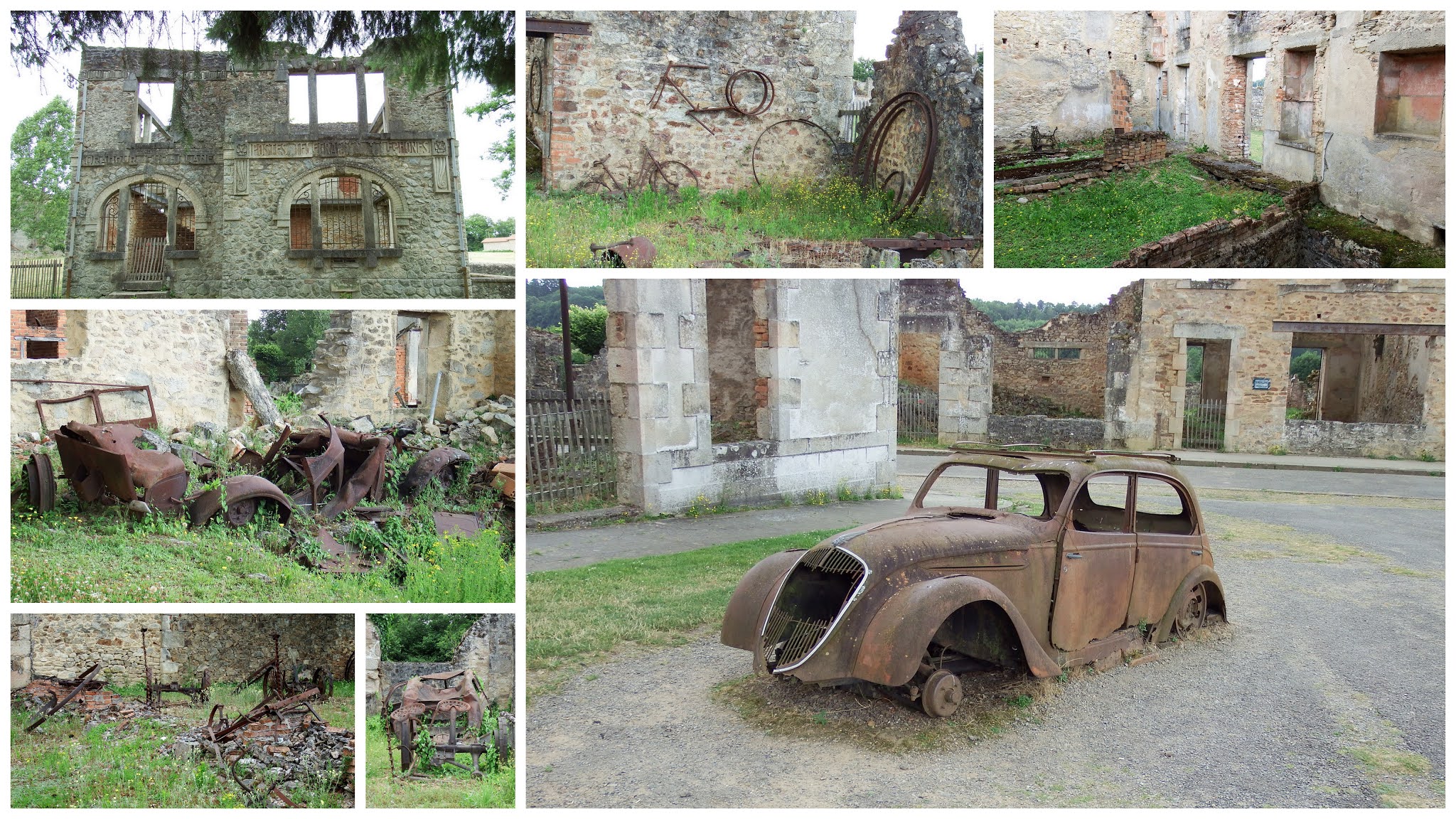
In 2016 I went on my second Leger Battlefield Tour, 'France Under The Jackboot' which looked at France under Nazi occupation. The tour included the events of the Holocaust in France, the role of the Special Operations Executive, concentrating on the work of Violette Szabo, and an emotional visit to the remains of Oradour-sur Glane. In this article I will look back at the events that led to the destruction of the village, my visit and some of the photos I took.


Oradour-sur-Glane was a small idyllic village, with a population of around 350, located approximately 15 miles north-west of Limoges which, on 10 June 1944, was the site of one of the worst crimes against civilians in occupied France.

Following the allied landings on 6 June 1944, along the beaches of Normandy, efforts by the resistance increased with the aim to disrupt German supplies and communications. Any organised attacks against German military personnel or property was met with brutal consequences resulting in members of the French resistance or sympathizers being killed or sent to concentration camps. Field Marshal Gerd von Rundstedt, Commander-in-Chief for the West, ordered that the resistance must be crushed, swiftly and with ruthless initiative.

There has been much speculation as to why Oradour-sur-Glane was subject to such a horrific massacre, especially when no German troops occupied the village and it seemed likely that the war would pass it by. Of course, as we shall see, this couldn't be further from the truth.

A number of reasons have been given... the killing of German troops by the resistance or an attempt to blow up a bridge at the nearby village of St. Junien. However, the most common theory was the abduction and execution of SS Sturmbannfuhrer Helmut Kampfe.

Kampfe, commander of the 3rd Battalion, 4th SS Panzergrenadier Regiment 'Der Fuhrer', was abducted on 9 June and executed the following day by the local resistance. A popular and highly-decorated officer he was also a close friend of SS Sturmbannfuhrer Adolf Diekmann.

General Lammerding, commanding officer of the 2nd SS Panzer Division, had already ordered action against Soviet civilians for partisan activities which resulted in the deaths of thousands of men, women and children and the destruction of many villages. On 9 June 1944 he issued orders for the 'cleansing' of the area surrounding Clermont-Ferrand, which included Oradour-sur-Glane. The same day, 99 men were hanged in Tulle near Limoges.

The following day troops from the 3rd Company, 1st Battalion, 4th SS Panzergrenadier Regiment, led by Adolf Diekman, advanced on Oradour-sur-Glane and by lunchtime had surrounded the village. The population had increased to over 600 people on that June day with children, evacuated from other areas, in the schools because of a medical visit, despite it being a Saturday. There was also a distribution of tobacco rations scheduled and many people were there to stock up on provisions.

The villagers were rounded up in the market square and separated by gender. The men, totalling 197, were taken to barns on the edge of the town while 240 women and 205 children were locked in the church. SS troops torched the barns and threw grenades into the church. A few tried to escape the flames but were shot. In total 642 men, women and children were killed in the massacre but that wasn't the end of the story. The village was looted and then burned to the ground. By 8pm the SS troops left the smoking ruins.

Only six men and one woman survived the horror that day while another fifteen villagers had managed to hide and avoid capture. Mme Marguerite Rouffanche was the sole survivor from the church and spent more than a year recovering from her injuries, she had been shot five times. She lost her husband, son, two daughters and grandson that fateful day. In 1953 she would give evidence at the trial in Bordeaux. She returned to the new village when it was built and lived there until her death in 1988.


The actions of the massacre didn't go unnoticed and forced the German Army to search for an explanation. In the evening, after the troops had left the village, Diekman ordered his officers not to discuss the events that had unfolded that day. If asked they were to explain that insurgents were the ones who attacked the division and were killed in the ensuing battle. This explanation was offered to General Eugene Bridoux, the State Secretary of the Vichy Ministry of Defence. It read that the men in the village had died during the battle, the fight had been initiated by the village and the women and children had taken refuge in the church and were killed when ammunition had ignited inside the building. They claimed that the church fire was caused by explosives hidden in the building by the resistance and was a deliberate act to discredit the Germans. However, it is hard to believe they would have set fire to a building in which the women and children were being held. A criminal investigation was held by the German Army Commander-in-Chief with the result that 'military concerns justified the retaliation.'

Following the end of the war the events of that fateful day continued to receive attention and in 1946 the French government declared that the site be a national memorial. Furthermore, a French prosecution team put forward documentation about the killings to the International Military Tribunal in Nuremberg. No conclusion was ever reached about what happened that day or why. There was no substantial evidence linking the resistance with the village or who was responsible for ordering the massacre. 

In the years that followed many explanations and theories were generated, many based on flimsy evidence. Despite all the attention the events received very few were ever prosecuted or even stood trial. Diekman died in battle a few weeks after the massacre while the German authorities refused to extradite Lammerding, even though he was convicted and sentenced to death by a court in 1953. He died in 1971.

A French court did prosecute 21 former members of the SS for the crimes committed in Oradour-sur-Glane. Two were sentenced to death and the rest received prison  sentences of between 5 and 20 years. All were freed, including those sentenced to death, within a few years.


Today the village stands as a memorial to the 642 men, women and children who died that fateful day in 1944. Should you visit the village? Definitely. It is sad and emotional but the only way to learn about the atrocities that happened there.

My visit was in July 2016 during the Leger 'France Under The Jackboot' tour and it was one of the saddest parts of the whole trip. At this point I must thank our tour guide, Frederick Greenhow, whose knowledge was second to none and throughout the whole tour kept us engrossed during the long coach journeys with stories and background information on the places we visited. I must also thank our two coach drivers, David Lonsdale and Simon Harriman, who did an amazing job.

You enter the village through the visitor centre which covers the years from 1933 to 1953 and tells the story of the occupation of France, the French Resistance and the events of the 9th and 10th of June through photographs, witness accounts, film and a slide show.

As you walk along the main street you see the ruins of various buildings, all part of village life, the post office, garage, workshops, wine store and schools. But it is not only the buildings that are of interest. It is the everyday items that also remind you of what happened that day. You will find bicycles, cars and even a sewing machine.


The only building you can enter is the church at the end of the village street where most of the massacre occurred. It is heartbreaking and a sobering experience as you look around and can still see the bullet holes in the walls of the church and the other buildings.

I also visited the nearby cemetery, another sobering experience, where all those who lost their lives that day are buried and whose names are inscribed on a memorial wall. The cemetery is also where Mme Marguerite Rouffanche is buried.

I am glad I had the chance to visit Oradour-sur-Glane and the emotions and feeling I felt that day will live with me forever.

With thanks to Frederick Greenhow

20 February 2021

HOT HITS... 'CAN YOU TELL THE DIFFERENCE?'

Music has been a passion of mine since I was in my teenage years and in the days before I was in a better financial position to start collecting my favourite artists records there was a cheaper option to get the hits of the day. With a single costing 7 shillings (approximately 0.35p in today's money) I couldn't afford to buy all the latest hits. However, the creation of albums of covers was another way to get my favourite songs, even though they weren't performed by the original artists. Back then I guess I wasn't so particular and fussy. In this article I will look back at the history of these albums and in particular the Hot Hits series issued by Music for Pleasure, many of which I had in my collection, were seldom off the turntable and bring back many memories.

.................................


The history of the 'Hot Hits' and similar albums can be traced back to the early-1960s and an Australian who was looking for a way to get into the record business. His name was Bill Wellings, a wannabe record producer who wanted to make it big in the business but had no named artists to record.

However, he did come up with the idea to release cover versions of current popular songs which he would release at a much cheaper price. In 1962 he formed the Top 6 Label and released extended play albums featuring 6 songs. The recordings were made at the studios of Pye Records who also distributed the records. It was Pye who changed the name of the releases to Top Six. They also tried to release full-length albums but this was short-lived so they concentrated on the Top Six releases although, by 1967, the releases ended.

Not one to let this deter him, Wellings launched a new label Top Ten Spectacular and soon after linked up with Music for Pleasure, a subsidiary label of EMI Records, and struck up a deal to release cover albums and the Smash Hits series was born.

Top of the Pops - Volume 8

This new and hugely successful idea did not go unoticed by other labels and soon after a number of new labels appeared, including Fontana and Marble Arch, although it was Hallmark with their
Top Of The Pops series that became the major competition. The series ran from 1968 to 1985. It didn't hurt sales to not only have a great title but also with the major TV music programme having the same name, despite not being linked, it certainly wouldn't diminish sales.

Another major selling point were the eye-catching covers, each of which featured a scantily-clad girl which made them highly collectable and this is still the case today. 

Music for Pleasure soon realised that their old-fashioned sleeve designs were in dire need of an overhaul. Hence the creation of the Hot Hits series, which copied the competition by releasing albums with a much more attractive and pleasing cover image. Most of the models are unknown but Bond girl Caroline Munroe, who appeared with Roger Moore in The Spy Who Loved Me, appeared on one cover as did model and page 3 girl Jilly Johnson. Today the covers would be classed as sexist but I am sure back then it wasn't a major issue.

This new series of cover albums ran from 1970 to 1973 and during that three year period twenty albums were released. They came up with a sales motto to promote the series - "Can you tell the difference between these and the original sounds?" Of course, they would never match the original recordings.

Despite the competition with Top Of The Pops, sales were not affected for either Music for Pleasure or Hallmark proving that there was a big market for these kind of releases and room for two major players in the marketplace.  

The first release in the series was issued in July 1970, cost just fifteen shillings (0.75p) and featured twelve cover versions including Lola, In The Summertime, Love Of The Common People and Something. A blonde girl in a 1960s short flowery dress and sunglasses adorned the cover.

The first Hot Hits album released in July 1970

The back sleeve of this first release included the following wording...
"These are twelve of the HOT HITS that are riding high in our charts. They have been excitingly recreated by talented artists who recapture the original appeal that has made them into hits. Music for Pleasure brings you these chart busters on a single LP so if you want to make your party swing or simply wish to relish the sounds of HOT HITS, pop this album onto your record player and enjoy yourself."

During 1970 they issued two more albums, in September and November, with covers of songs by Freda Payne (Band Of Gold), The Hollies (Gasoline Alley Bred), Anne Murray (Snowbird), Matthews Southern Comfort (Woodstock) and many, many more.

The following year saw a further five releases in the series although it was also the year that saw a few changes. Released in July 1971 Hot Hits 6 was the first to feature a sporting theme on the cover, a bikini clad girl wielding a cricket bat, courtesy of Geoffrey Boycott.

The first of the 'sporting themed' covers

The sporting style featured on all future releases. The front and back cover images were taken by Brian Ward although he wasn't the only photographer to be assigned the pleasure of taking the cover photos. Other volumes featured the work of Terry Beard, Clive Coote, Jack Wood, Peter Meech and Dick Swayne.

This was also the year that saw Hot Hits releases first appearing on the charts. Budget albums registered on the album charts and of the twenty released three charted. All three were from 1971 with Volume 6 hitting the top spot, Volume 7 reaching #3 and Volume 8 peaking at #2, not bad for albums just featuring covers of recent hits and an indication of how popular they were. This practice was ended in 1972 as it gave an unfair advantage to budget albums and was unfair on record companies who were issuing full-price albums.

Artists covered on the 1971 releases included George Harrison, Neil Diamond, The Rolling Stones, Twiggy, Middle Of The Road, Rod Stewart and The Piglets.

Sporting a girl in Arsenal FC kit, minus the club logo, Hot Hits 7 was the first of the albums I purchased, not just for the cover although being an Arsenal supporter I was swayed slightly. The photo was taken at Stamford Bridge, home of Chelsea FC whose kit is being worn by the model on the back sleeve. It also contained some of my favourite songs from this period... Back Street Luv (originally recorded by Curved Air), You've Got A Friend (James Taylor) and Maggie May (Rod Stewart). 

Volume 7 - my first purchase

Seven volumes were issued in 1972, the most of any of the years the albums were in existence. 
Sporting themes featured on the covers throughout the year included rugby, skiing, boxing, tennis, archery and motor racing.  

Teeny boppers were kept happy in 1972 with the inclusion of covers of Donny Osmond, The Osmonds and David Cassidy while the more mature record buying public could enjoy covers of hits by artists as varied as Isaac Hayes, Cat Stevens, Nilsson, Paul Simon, Tom Jones, Johnny Cash, Elvis Presley and even The Pipes & Drums & Military Band of the Royal Scots Dragoons Guards!

There was never any information on who was singing on the albums and it would be many years before rumours appeared about who the performers were. Of the many names mentioned it is known that both Elton John (who would go on to have major success as a solo artist) and Tina Charles (best know for her hits I Love To Love and Dance Little Lady, Dance) were the vocalists on many of the tracks. Other session musicians and vocalists who have been mentioned include Big Jim Sullivan, Larry Adler and David Bowie.

Elton John and Tina Charles

Five Hot Hits albums were released in 1973 with the final being the twentieth in the series. This was the era of glam rock and many of the songs featured this year were from glam rock groups like Sweet (Blockbuster and Hell Raiser), Wizzard (Ball Park Incident and See My Baby Jive) and T-Rex (20th Century Boy and The Groover).

Released in August, and featuring a girl fishing in a bikini, the final album in the series was Volume 20 and included more glam pop songs like Dancing On A Saturday Night (originally by Barry Blue) and 48 Crash (Suzi Quatro).

The final release

Bill Wellings made the decision to terminate his work with the label in 1973 to allow him to concentrate on other aspects of the music business. With Wellings no longer involved the series came to an end. It is hard to work out why Music for Pleasure did not continue, especially as there was obviously still a market for these kind of releases. The continuing success of the Top Of The Pops albums, which continued for many more years and well into the 1980s, is proof of their popularity.

There was something special about these releases and they will always hold many memories for a music fan like me just starting out on his road to record collecting. I am not sure how big the market would be, but I am sure I am not the only one who would buy a box set of CDs replicating the original album contents with individual sleeves reproducing the original front and back covers along with a comprehensive booklet detailing a history of the albums, detailed track and release information, photos and memorabilia. I can only dream as I guess contractual details would be a nightmare for any company taking on the task.

06 February 2021

PARKLAND WALK

This article will cover two of my interests... abandoned old railway lines and urban exploration. The 5 kilometre Parkland Walk follows the course of the railway line that used to run between Finsbury Park and Alexandra Palace. Last year I explored the southern section between Finsbury Park and the Highgate Tunnels and in this article I'll look at the history of the route and include many of the photographs I took.

Parkland Walk


The line between Finsbury Park and Highgate dates back to the 1860s when it was constructed by the Edgware, Highgate and London Railway. Before the line actually opened it was absorbed into the Great Northern Railway (GNR) on 22 August 1867.

In 1872 and 1873 branch lines opened between Finchley to High Barnet and Highgate to Alexandra Palace. Two years later the Palace was destroyed in a fire and that section of the line closed for two years during the reconstruction. The line would face two further closures during the 1880s. By 1923 the Great Northern Railway (GNR) had become part of the London & North Eastern Railway (LNER).

In 1935 the London Underground revealed their plans (The Northern Heights Plan) to incorporate the lines into the Northern Line. Work was halted with the start of World War 2 in 1939 and by the end of the war all the plans were scrapped. Before and in the few years following the end of the war underground maps did show the routes as 'under construction.'

Passenger trains continued to run on the lines however, by July 1954, British Rail, who had taken over from the London & North Eastern Railway (LNER), ceased services.

The branch line to Alexandra Palace closed in 1957 although the section between Finsbury Park, Highgate and East Finchley remained open for freight services through to 1964. Until 1970 the line was used to transfer empty stock from the underground and two years later, in 1972, the track was lifted signalling the demise of the line.


Following the removal of the tracks most of the station platforms and buildings were demolished. Officially opened in 1984 the sections between Finsbury Park to Highgate and Highgate to Alexander Palace were designated as The Parkland Walk and followed the bridges and cuttings. One section, the tunnels and station at Highgate, were excluded from the walk. Plans to convert it to a road were, fortunately, scrapped following opposition from locals and environmentalists collectively known as 'The Friends of The Parkland Walk.' In 1990 it was declared a local nature reserve, the longest in London. 

Having looked at a brief history of the area we will now follow my walk along the route from Finsbury Park to Highgate with more detail about the various highlights that can be found along the way for those who, like me, are interested in old railway lines.

Arriving at Finsbury Park Station I made my way the short distance to Oxford Road where there is an overbridge that crosses the main line and leads to Finsbury Park. You can approach the start of the walk from either side of the line but I approached from the end of Oxford Road, turning left just before the overbridge and along the embankment that rises by a row of Victorian houses where my journey begins. 


From there I headed along the old track over Upper Tollington Park towards the next bridge which crosses Stapleton Hill Road, and the Gospel Oak to Barking line below, and was the site of Stroud Green Station. The station is no longer there but you can imagine how it was back in the late-1800s and early 1900s with platforms either side, cantilevered from the bridge, with the wooden station building on ground level underneath. What does remain on the main road below is the station master's house and the site of the old goods yard. The station closed in 1954 and stood derelict before being destroyed by fire in 1967.

The site of Stroud Green Station


Walking on I crossed Mount Pleasant Villas, where the embankment becomes a cutting, and continued beneath two more bridges which carried both Mount View Road and Crouch Hill. As you exit from the bridge there is a modern looking building on the left which, before a modern redevelopment, was originally built to house switchgear for the planned Northern Line tube extension.

One of the brick structures along the route


Entering the area known as Crouch Hill Park you pass some graffiti covered brickwork supporting the sides of the cutting and a footbridge. This is one of several that can be found on the walk.

A few more steps and you arrive at Crouch End Station. Opened in August 1867 there were two platforms and steps leading up to the station buildings built on the road bridge that crossed the line. Buildings on the platform and those on street level were demolished in 1966 and 1977.

What remains makes interesting viewing. The two platforms have survived and the steps leading up to the road pass a brick structure which I believe may have been toilets. It appears a new structure has been built on the bridge with what looks like inverted arches. I did not venture up the stairs (something for my next visit) but apparently you get a good view from there of the platforms below. 

For lovers of disused railways this is probably the most interesting part of the walk. However, there is much to be seen along the walk if you are prepared to look closely in the hedgerows.

Crouch End Station


Continuing onwards, the walk runs parallel to Hornsey Road, crosses over Stanhope Road to an embankment where another bridge crosses Northwood Road.

It is between these two bridges that another reminder of the past can be found. Remains of a brick structure can be spotted that may have been a signal man's hut. There are some steps on the left but what makes this really interesting is the fact that the roots of a tree have engulfed the brickwork.


The last section rises and then a cutting signals the end of this section of the walk. There is an exit on the left which takes you up to the road and the route you would take along Holmesdale Road, Archway Road, past Highgate Station to Muswell Hill Road and eventually rejoining the old line which takes you to Alexandra Palace.

However, it is worth walking the few extra metres first where you will find the two portals of the Highgate Tunnels. Closed to the public the two entrances are barred. One reason is the fact that the tunnels are home to the Bat Project and access is prohibited to protect them and their habitat from disturbance.

Apparently the tunnels have been used for television dramas and I imagine they made ideal locations. Oh how I would like to explore those tunnels further, but alas that won't happen.


Highgate Tunnels


This walk is well worth visiting, not only to those who are interested in old railways but anyone who enjoys a nice walk through the woodlands and viewing all the wild flowers, plants and trees along the way.

I plan to walk the remaining section between Highgate and Alexandra Palace, and revisit some of the areas I missed, as soon as possible and will be adding a second part to this story.